When we say "home insurance" or "homeowners insurance," we're referring to House & Property insurance.
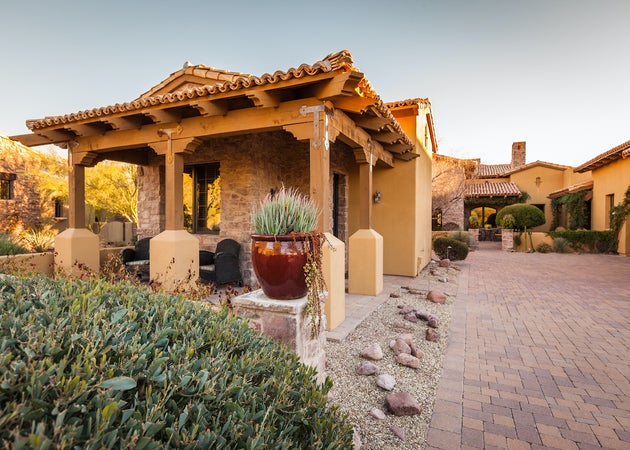
From the fast-growing metro areas of Phoenix and Tucson to the vast pine forests of Flagstaff, Arizona’s housing market includes both dense urban development and remote homes in wildfire-prone landscapes, making reliable homeowners insurance in Arizona an essential financial safety net.
Homeowners face a number of potential risk factors, including monsoon-related flooding, wildfire exposure, extreme heat, dust storms, and relatively high crime rates in city centers. This diversity means your Arizona home insurance needs can vary significantly depending on where you live in the state.
Arizona home insurance requirements
Arizona state law does not require homeowners insurance, but if you own property in the Grand Canyon State, it’s almost always worth the cost to carry it. Plus, if you’re financing your home, your mortgage lender likely requires you to purchase home insurance anyway.
Without proper coverage, your lender can step in and buy a policy on your behalf — called force-placed insurance. It's usually more expensive than a standard policy, and it only covers the structure of your home, not your belongings or liability. In other words, it protects the lender, not you. That’s why it’s crucial to find your own home insurance policy.
How does homeowners insurance work in Arizona?
This short video walks you through how to get a quote and what insurance covers. Click a topic on the video to jump straight to what matters most to you.
What does home insurance cover in Arizona?
A standard home insurance policy in Arizona covers damage to your home and other structures on your property, as well as your personal belongings. It also provides personal liability coverage should someone get injured on your property and living expenses if you must temporarily vacate your home due to covered damage.
Here’s a more detailed breakdown of the types of coverage most Arizona home insurance policies include.
Dwelling coverage (Coverage A)
Dwelling coverage, also called Coverage A, is a core part of a standard home insurance policy. It covers the cost of covered damage to the home itself, including the roof, walls, foundation, floor, windows, doors, and built-in systems.
Notably, reconstruction costs grew 3.8% from 2024 to 2025 for residential structures in Arizona, according to the Verisk Wildfire State Risk Report 2025. This makes it especially important to insure your home for its full rebuild cost (called replacement cost value, or RCV). The most accurate RCV estimate for your home will reflect current labor and material rates.
You can work with your insurance agent to estimate the replacement cost, or hire an independent Arizona appraiser to help you calculate what it would cost to reconstruct your home.
Other structures coverage (Coverage B)
Your home is probably not the only structure on your property. Standard Arizona home insurance protects other structures (Coverage B), too, such as:
- Detached garages
- Casitas
- Sheds
- Gazebos
- Guest houses
Notably, fences are included. This is important in Arizona, where many homes have block wall-type fences.
A typical home insurance policy sets the max payout for other structures at 10% of your dwelling coverage limit. For instance, if you have $300,000 in dwelling coverage, you’ll have $30,000 in other structures coverage. If you have multiple additional structures on your policy, it may be worth increasing this limit.
Personal property coverage (Coverage C)
Another core element of standard home insurance is personal property coverage (Coverage C). This protects your belongings should they be damaged or stolen. Personal property includes:
- Furniture
- Electronics
- Clothing and jewelry
- Artwork and decor
- Collectibles
- Gym equipment
- Books, movies, and other media
Most policies default to actual cash value (ACV) coverage for personal property. In plain terms, that means depreciation is factored in. So if your five-year-old laptop gets stolen, you'd get paid what a five-year-old laptop is worth today (up to your policy limit), not what a new one costs. You may be able to upgrade to replacement cost value coverage to get paid out for the full cost of a brand-new replacement instead.
Loss of use (Coverage D)
Loss of use coverage (Coverage D) helps pay for temporary housing and related costs, in the event your home is uninhabitable because of a covered loss. This coverage is also sometimes called additional living expenses (ALE) coverage.
For example, if a wildfire damages your home and makes it temporarily uninhabitable, loss of use coverage can help pay for hotel costs, as well as additional transportation and food costs.
Personal liability and medical payments coverage (Coverages E & F)
Personal liability coverage (Coverage E) protects you financially if someone gets injured on your property or someone in your household damages another person’s property. It comes in especially handy if you’re sued. This is particularly important in Arizona, where many homes have swimming pools, which increase liability risks.
Policies also generally include medical payments coverage (Coverage F) for minor injuries to your guests. This can help resolve incidents without litigation.
Common causes of damage: What’s covered and what’s not
In home insurance terms, a peril is an event that causes damage or financial loss to the homeowner. Most Arizona homeowners insurance policies include:
-
Open-peril coverage for the home’s structures, meaning you’re covered for any cause of damage except those your policy specifically excludes.
-
Named-peril coverage for personal belongings, meaning you’re only covered if the loss is caused by a peril specifically named in your policy.
Perils typically covered in Arizona
-
Fire: Wildfires are a major threat in Arizona. According to Verisk, all Arizona homes have at least some wildfire risk. More specifically, 12.02% have low risk, 20.21% face moderate risk, and 2.3% are in areas with high to extreme wildfire risk.
-
Wind and hail: Arizona faces multiple weather threats, including microbursts (intense thunderstorms) and haboobs (severe dust storms), especially during monsoon season.
-
Theft and vandalism: This coverage is especially important in urban areas with higher crime rates, such as Phoenix. If you are a “snowbird” with a seasonal home in Arizona, check your policy's vacancy clause. Standard coverage for theft and vandalism may be limited if the home sits empty for 30 days or more. You may need an endorsement or separate policy to stay fully protected.
-
Sudden water damage: Internal damage, like from a burst pipe, is typically covered. You might not worry about frozen pipes in the desert, but if you live in Arizona’s high country, cold temps in the winter aren’t out of the question.
Common exclusions in Arizona
-
Flooding: Damage from rising water (even flash floods from monsoons) is the most common home insurance exclusion to note. You’ll need a flood insurance endorsement or separate policy to be covered.
-
Earth movement: Earthquakes might not be as common in Arizona as they are in neighboring California, but the University of Arizona reports that the Grand Canyon State still gets hundreds of earthquakes a year. These and other earth movements (e.g., sinkholes) aren’t covered by a standard policy.
-
Maintenance and sun damage: Arizona’s intense UV exposure can degrade roofing and other property over time, but any kind of general wear and tear is excluded from insurance coverage.
-
Pest damage: Termites can cause serious damage, but they’re excluded from home insurance coverage. And while scorpions may not cause structural damage, infestations can be expensive to eliminate. Insurers treat pest management as a maintenance issue.
Additional home insurance coverage to consider in Arizona
Because standard Arizona home insurance policies don’t cover everything, you may want to consider purchasing insurance endorsements (optional add-on coverage types) or separate policies, such as:
-
Flood insurance: If you’re worried about water damage during monsoon season, or if you live in a FEMA-designated flood zone, flood insurance can help ensure you’re protected. According to the Arizona Department of Insurance and Financial Institutions (DIFI), flood risk increases following wildfires.
-
Earthquake insurance: Similarly, if you’re worried about damage from earth movements, you can purchase earthquake insurance.
-
Water backup coverage: You can purchase a water backup endorsement to cover sewer and sump pump backups. Otherwise, damage from backups is not covered.
What to do if your home insurance is canceled or nonrenewed in Arizona
Securing home insurance coverage is proving increasingly difficult for some homeowners. DIFI reports that Arizona home insurance premiums are on the rise, and more homeowners are facing nonrenewals due to increased wildfire risk.
Unlike some states, Arizona does not offer a Fair Access to Insurance Requirements (FAIR) Plan, which is often a last resort for homeowners whose policies are canceled or nonrenewed due to their properties’ risk profiles. That said, DIFI does maintain a list of insurers that are willing to work with homeowners in high-risk areas, and the organization also recommends getting involved in community mitigation organizations to learn how to improve your home’s risk profile and make it more insurable.
The cost of home insurance in Arizona
Arizona homeowners with $350,000 in dwelling coverage pay an average of $1,193 per year with Kin. However, home insurance costs depend on several factors, including your coverage limits, deductibles, and claims history. Location also plays a key role, especially in terms of wildfire risk and proximity to fire protection services.
Dwelling coverage (the maximum amount your insurer will pay to rebuild your home) is a big factor in pricing, as well — the more coverage you need, the more your policy will cost. Here’s a breakdown of the average cost of Kin home insurance in Arizona based on various dwelling coverage limits.
|
Dwelling coverage limit |
Average policy cost |
|
$350,000 |
$1,193 |
|
$500,000 |
$1,704 |
|
$750,000 |
$2,556 |
|
$1,000,000 |
$3,408 |
Average premiums for Kin home insurance customers as of September 2026. Individual rates will vary.
Why Arizona rates are rising
Home insurance rates are on the rise across the U.S., and Arizona is no exception. The increase in wildfires and uptick in reconstruction costs following fire damage are two contributing factors to elevated rates in Arizona. Another is reinsurance.
Insurers can’t raise rates in one state to help cover increased claims costs in other states. Instead, they purchase reinsurance, which — odd as it sounds — is insurance for insurance companies. Reinsurance protects the insurers in case of catastrophic losses. Costs on the global reinsurance market have been going up in recent years, not only because of Arizona wildfires but also because of increasing climate-related disasters worldwide. Reinsurance price increases are typically passed on to home insurance customers.
Regional cost variation
Where you live in Arizona significantly affects your home insurance costs:
-
Homes in wildfire-prone areas tend to have higher premiums. Northwestern, central, and southeastern Arizona face the steepest risk, but most of the state is exposed to some level of wildfire danger.
-
Urban areas with high fire protection may face lower premiums, but some parts of the city might have high crime rates, which is another factor that can drive up costs.
-
Remote properties may cost more to insure due to limited emergency response services.
Arizona’s primary weather and environmental risks
Arizona homeowners should note a few specific weather and environmental risks and considerations when purchasing homeowners insurance.
-
Wildfires and ISO ratings: Insurers evaluate fire risk using ISO Public Protection Classification scores, which measure a community’s ability to suppress fires. Scores range from 1 (superior fire protection) to 10 (poor fire suppression). Homes in higher-risk classes — especially Class 8B or higher — may face higher premiums, stricter underwriting, or difficulty obtaining insurance.
-
Wildland Urban Interface: The Wildland Urban Interface refers to the transitional area between unoccupied land with wild vegetation and human development. These areas pose a heightened wildfire risk and can be more expensive (or difficult) to insure. Throughout Arizona and across the country, these areas are growing increasingly popular for homebuilders, according to the U.S. Forest Service.
-
Monsoon season and post-fire flooding: Arizona’s monsoon season (June through September) can bring intense rainfall in a short period of time. The risk is heightened by burned landscapes following wildfires. These areas are less able to absorb water, leading to flash floods and damaging debris flow, creating a critical coverage gap. While Arizona homeowners insurance protects you financially in the event of fire damage, the ensuing flash floods aren’t covered by a standard policy.
-
Geospatial AI in underwriting: Many insurers now use satellite imagery and geospatial AI to assess individual properties. These tools help insurers evaluate roof condition and how close surrounding vegetation is to the home, which directly affects wildfire risk.
Arizona insurance laws and consumer protections
The Arizona Department of Insurance and Financial Institutions regulates home insurance in the state, including rate filings and customer complaints. Key consumer protections include:
-
Nonrenewal notice: Arizona state law requires insurers to provide at least 30 days’ notice of an insurance nonrenewal before the end of the policy period.
-
Rate oversight: In Arizona, rates must be based on state-specific loss experiences.
How to save on your Arizona home insurance premium
Arizona home insurance costs may be on the rise, but there may still be ways to lower your insurance costs in the Grand Canyon State:
-
Shop around: Always get quotes from multiple insurers. When comparing insurance companies, make sure the policies are similar. For a true apples-to-apples comparison, policies should have similar coverage limits and deductibles.
-
Ask about discounts: Arizona insurers often offer discounts, including claims-free discounts, bundle discounts for purchasing home and auto, and military discounts. Ask each insurer you’re considering what discounts you might be eligible for.
-
Tackle mitigation: Create a defensible space around your home by clearing brush and vegetation to slow the spread of wildfires. DIFI recommends getting involved with community mitigation organizations, including FEMA, Firewise USA, and the Federal Alliance for Safe Homes, to learn how to better protect your home against weather threats.
-
Adjust coverage limits and deductibles: You can lower your premium by raising your deductible or reducing your coverage limits — but both come with trade-offs. A higher deductible means more out-of-pocket costs when you file a claim. Lower coverage limits mean your payout might not fully cover the damage.
Frequently asked questions about Arizona home insurance
Is home insurance required by law in Arizona?
No, home insurance is not required by law in Arizona. However, most lenders require you to carry home insurance if you have a mortgage.
Does home insurance cover damage from a haboob?
Yes. Haboob damage — broken windows, roof damage, downed fences — is covered under a standard home insurance policy, the same as any other windstorm. One thing worth checking, though: some Arizona policies carry a separate wind and hail deductible, which is often a percentage of your home's insured value rather than a flat dollar amount. On a $300,000 home with a 2% wind/hail deductible, you'd pay $6,000 out of pocket compared to the flat deductible (often somewhere between $1,000 to $2,500, depending on your selection) that applies to most other claims. Check your declarations page or ask your agent for more information on your policy deductibles.
Why is my Arizona home insurance increasing?
Home insurance premiums are going up across Arizona because of the increased frequency of wildfires and higher claims costs. Plus, the cost of reinsurance (which is insurance for insurance companies) is going up for Arizona insurance companies, and those costs get passed on to customers.
Do I need a separate flood insurance policy in Arizona?
Yes, you should consider getting a separate flood insurance policy in Arizona, depending on where you live. If you live in a flood zone, your lender may require you to carry flood insurance. Because flooding is common after wildfires and during monsoon season, it can be smart to purchase even if you’re not required to carry it.
How does my ISO fire rating affect my premium?
Your ISO Public Protection Classification reflects your area’s fire protection capabilities. If you live in an area with a greater risk (and a higher ISO rating), you should expect higher premiums — and you may find it difficult to secure coverage at all.


