Get a quote

Bundling home & auto insurance

Save up to 20%* when you bundle your home and auto policies with Kin.

When we say "home insurance" or "homeowners insurance," we're referring to House & Property insurance.

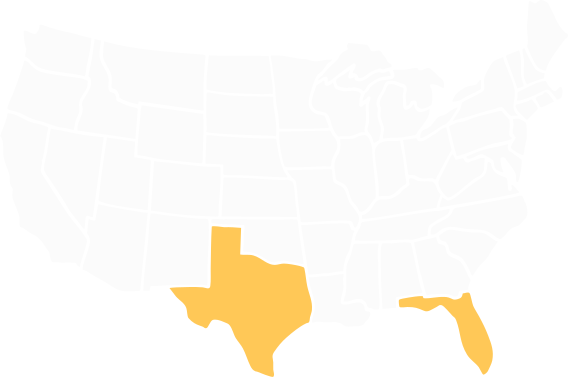
Outside of Florida & Louisiana, Kin offers House & Property insurance, which has a base policy that provides coverage similar to landlord insurance. Homeowners who live in their home can add an owner-occupied endorsement to create coverage similar to an HO3 policy.
Back to quote
GettyImages-2177681109.jpg

Why bundle?

From a streamlined experience to serious savings, bundling makes life easier.

Savings

You can save up to 20% when you bundle your policies with Kin.*

Simplicity

Two policies, one portal. Manage everything in one, easy-to-access place.

Exceptional care

Licensed Kin agents are easy to reach and ready to listen. Contact us via email, phone, or live chat.

What does homeowners insurance cover?

Rest easy knowing your coverage protects what matters most.

for the actual structure of your home, inside and out.

for things like your detached garage or shed.

for your personal belongings that make your house a home.

for additional living expenses when a covered loss forces you to temporarily relocate.

if you accidentally cause someone bodily injury or property damage.

if a guest is injured on your property.

What does auto insurance cover?

No matter what’s down the road, we’ve got you covered.

Common questions about bundling home & auto insurance

What is a home and auto insurance bundle?

A home and auto insurance bundle is an agreement where an individual purchases both their homeowners and car insurance policies from the same provider. This arrangement is a common way to earn discounted coverage, often called a multi-policy discount. In addition to saving on premiums, policyholders who bundle can also benefit from streamlined account management by having one point of contact, one bill, and a single renewal date. 

How do you bundle home and auto insurance?

To bundle home and auto insurance, contact an insurance provider to request a quote for both policies at the same time. If there is already an active policy in place, call your existing insurer to ask about adding the other type of coverage to the account. It may also be helpful to contact new providers to price out whether switching to a bundle makes better sense for your specific needs. Most insurers allow you to start this process through an online portal or by speaking directly with an agent.

What types of insurance can be bundled together?

While home and auto is the most popular combination, many other types of insurance can be grouped together to earn a discount. Most providers allow you to mix and match different policies based on your needs. Common options for bundling include:

  • Property and vehicle: Combining homeowners, renters, or condo insurance with your car, motorcycle, boat, or RV policy.
  • Liability and specialty: Adding an umbrella policy — which provides extra liability protection — to your existing home or auto coverage.
  • Life and property: Pairing a life insurance policy with your homeowners or renters insurance.
  • Business insurance: Grouping general liability insurance with commercial property or professional liability coverage.

Keep in mind that bundling options depend on what a specific company offers. If a provider does not sell a certain type of insurance, you may not be able to include it in your package.

How much can I save by bundling home and auto insurance?

Combining home and auto insurance often leads to one of the largest available discounts. According to the Insurance Information Institute, bundling these policies typically saves homeowners between 5% and 15% on their total premiums. In some cases, specific providers may offer savings as high as 20%. While the exact dollar amount depends on your location and coverage needs, bundling remains a highly effective way to lower overall insurance costs.

Does bundling home and auto insurance affect coverage?

Bundling home and auto insurance does not typically reduce the quality of your protection. Each policy remains a separate legal contract with its own coverage limits — the maximum amount the insurer pays for a claim. However, bundling can simplify your coverage by aligning renewal dates and occasionally offering a single deductible. This means if one event damages both your home and car, you may only have to pay your out-of-pocket cost once. Check with your insurer for details specific to your policy.

Can I switch insurance companies to bundle home and auto?

You can switch insurance companies to bundle your policies at any time. You do not have to wait until your current policies expire to make a change. However, it is often simplest to switch near your renewal date to avoid potential early cancellation fees from your current provider.

Here’s how to ensure a smooth transition:

  • Compare quotes: Get pricing from new providers for both home and auto together to see if the total savings beat your current separate rates.
  • Check for fees: Review your current policies for "short-rate" cancellation fees, which are penalties for ending a policy early.
  • Coordinate effective dates: Set your new bundle to begin on the same day your old policies end to avoid a lapse in coverage — a period where you have no insurance.
  • Notify your lender: If your home insurance is paid through an escrow account, you must inform your mortgage lender so they can send payments to the right company.

Who qualifies for home and auto insurance bundling discounts?

Most homeowners and renters who also own a vehicle qualify for a bundling (also known as a multi-policy) discount. To be eligible, you simply need to purchase at least two qualifying policies from the same insurance company. While most standard car and home insurance combinations work, many providers also allow you to bundle coverage for motorcycles, boats, or RVs. Eligibility usually extends to spouses or residents of the same household who manage their policies under one account.