





Most standard home insurance policies cover hail damage to a home’s roof and exterior, as well as the roofs and exteriors of other structures on your property. Below, we’ll review how hail coverage works, from deductibles to coverage limits to exclusions.
What types of hail damage are covered?
Most home insurance policies cover hail damage to your home’s roof and exterior. Here’s a closer look at the main types of coverage included in a standard home insurance policy and what hail-related damage each covers and does not cover:
- Dwelling coverage (Coverage A) provides protection for your home’s physical structure. In the event your home’s roof or siding is damaged by hail, you should be able to file a claim.
- Other structures coverage (Coverage B) similarly offers protection to the roof and siding of other structures on your land, such as sheds, detached garages, and gazebos. Additional structures, from fences and mailboxes to guest houses and in-ground swimming pools, are also typically covered if they’re damaged by hail.
- Personal property coverage (Coverage C) financially protects your belongings if they’re outside and damaged by hail. For instance, outdoor furniture, a grill, or recreational items like a bike or kayak might sustain hail damage. (Note that vehicles are typically excluded from coverage; instead, you’d file a car insurance claim if your automobile is damaged by hail.)
How hail damage coverage limits work
Home insurance policies come with specific coverage limits, which represent the maximum amount paid for a claim. Should the damage you experience exceed those limits, you’d be responsible for covering the rest out of pocket.
Your dwelling coverage limit should reflect the total cost to rebuild your home from scratch. Coverage limits for other structures and personal property are typically calculated as a percentage of that amount.
- Other structures: Items like fences or detached sheds are usually covered up to 10% of the dwelling limit.
- Personal property: Belongings like patio furniture or electronics are often capped at 50%.
Example: If your dwelling coverage limit is $300,000, coverage for other structures might be limited to $30,000 and personal property coverage may be limited to $150,000.
It’s unlikely that hail damage would exceed these preset limits. But it’s always smart to review your limits before purchasing or renewing a policy, and periodically revisit them to make sure you have the coverage you need in place.
Understanding hail deductibles
Depending on your location and policy details, your standard policy deductible could apply for hail damage. But in areas where hail is more common, there may be a separate deductible.
Home insurance policies with specific language around hail typically structure hail deductibles as a flat rate or percentage of coverage:
- Flat rate: With a flat-rate deductible, there is a set dollar amount you’ll pay out of pocket before coverage kicks in. For instance, if there’s a $2,500 deductible and the covered hail damage amounts to $7,000, you’ll pay $2,500 out of pocket, and your home insurance will cover the remaining $4,500.
- Percentage of coverage: Alternatively, insurers may set your hail deductible as a percentage of coverage. For instance, if your dwelling coverage limit is $300,000 and there’s a 1% wind and hail deductible, you’ll pay $3,000 out of pocket.
When is hail damage not covered?
Damage from hail and similar natural disasters is usually covered by most standard home insurance policies. However, there are some instances when the damage may not be covered — or may be covered differently.
In hail-prone areas
If you live in an area that is known for regular hailstorms, your insurer may limit your coverage. For instance, the insurer may not cover damage that is purely cosmetic, or it may only offer actual cash value coverage for roofs (rather than full replacement cost). As mentioned above, these areas may also have a separate hail deductible.
So, how do you know if you live in an area with a high risk of hail damage? You can check your policy or speak with your agent, but there’s a good chance you’re categorized as living in a hail-prone area if you’re a resident of:
-
Nebraska
-
Colorado
-
Wyoming
According to the NOAA National Severe Storms Laboratory, these states are in “Hail Alley” and average seven to nine days of hail each year.
For older roofs or bad siding
Older roofs are more easily damaged by severe weather, which means your insurer may be less likely to offer coverage — or the cost of the policy (called your premium) may be much higher.
Some insurers offer a roof surfacing payment schedule add-on that allows you to get coverage for wind and hail, even with an older roof. This addition to your policy, known as an endorsement, keeps premiums low — even with an old roof — because claims are paid out on a schedule based on the roof’s age. The older the roof, the less insurance will pay to replace it.
Roofing materials also affect the payout. For instance, metal roofs are more durable than shingle roofs and generally merit a higher claims payout when damaged by hail.
Some insurers may refuse hail damage coverage depending on the type of siding you have, too. Aluminum and vinyl siding are the biggest offenders, as they don’t hold up well to wind and hail. Review your policy to make sure you’ll still be covered if you have aluminum or vinyl siding.
Outside the right time period
Insurers usually specify a time period to report hail damage. If your home is damaged by a hailstorm, review your policy to understand how long you have to report the damage.
Also, note that if your roof or siding is damaged by hail before a policy begins, you cannot file a claim for hail damage once the policy is active. (However, if you previously had homeowners coverage with a different insurance company, you could file a claim with them.) Similarly, if your coverage lapses, and your home takes on hail damage at that time, you won’t be covered.
Due to general wear and tear
If your insurer determines the damage to your roof and siding is due to general wear and tear (or lack of maintenance), rather than the recent hailstorm, it won’t be covered.
How roof age affects hail damage coverage
As mentioned above, getting home insurance coverage for a house with an older roof can be challenging. Insurers may outright reject your application if your roof is at the end of its life, or they’ll charge a high premium.
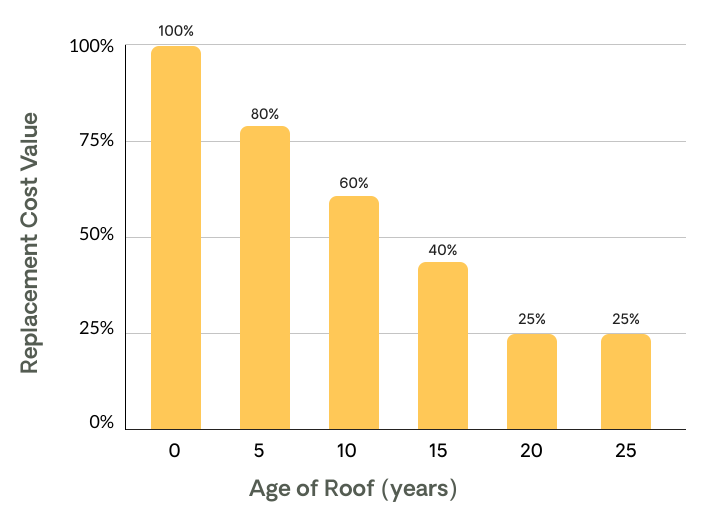
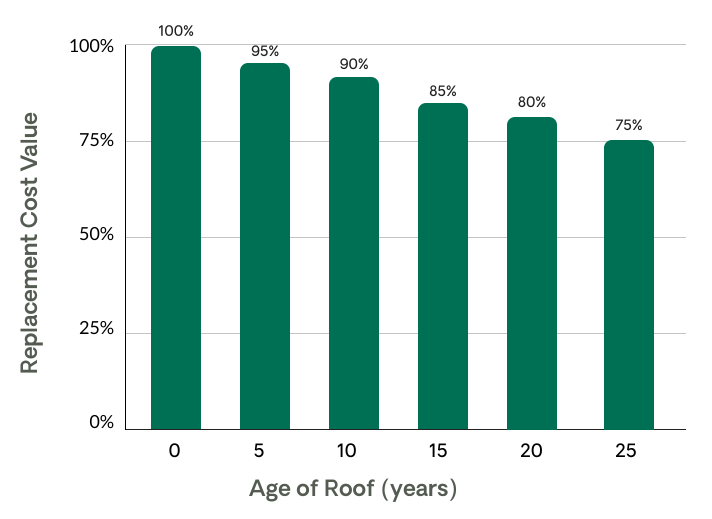
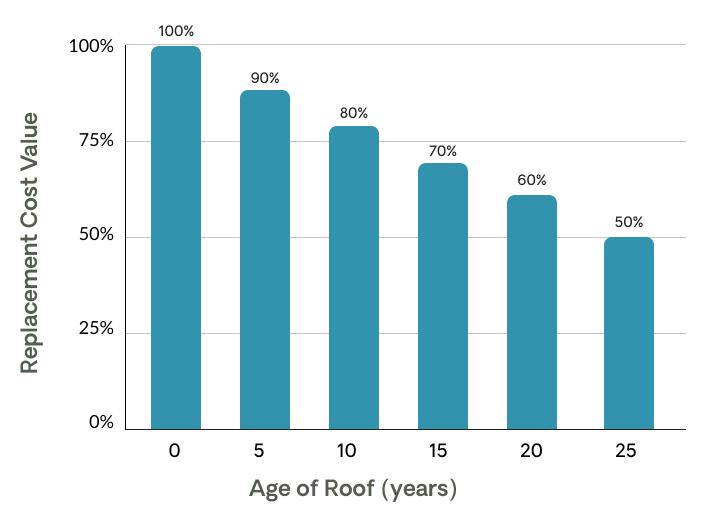
A roof surfacing payment schedule endorsement is one way to get coverage with an older roof. Rather than pay the full replacement cost, your insurer will use the age and material of your roof to calculate the percentage it will pay out in the event of covered hail damage.
The graph below helps illustrate how both the roof material (shingle, metal/slate, or concrete/clay tile) and age (between 0 and 25 years) can impact roof replacement cost value with a roof surfacing payment schedule endorsement.
Home insurance tips for hail-prone areas
If you live in an area that gets a higher-than-average amount of hail each year, here are some tips to prevent claims and avoid expensive insurance premiums:
- Review your policy carefully: First and foremost, check your current home insurance policy to ensure hail damage is included. Make note of any special deductibles or endorsements that will affect coverage in the event of a claim. If you’re not happy with the coverage, speak with your agent or shop around for a new policy.
- Upgrade your roof: Getting a new roof is expensive, but if yours is nearing the end of its life, it’s going to be harder for you to get coverage — and the roof will be more susceptible to damage. Consider upgrading to a metal roof, which is the most durable in the face of hail, or Class 4 impact-resistant shingles.
- Upgrade your siding: Similarly, consider installing new siding if your current siding is aluminum or vinyl. While affordable, these materials can’t hold up to hail and heavy winds.
Frequently asked questions
Does homeowners insurance cover roof replacement?
Yes, home insurance covers roof repair and roof replacement in the event of a covered event (called a peril), provided your policy doesn’t have any exclusions. The term “covered peril” is key here. If your roof needs to be repaired or replaced due to negligence or general wear and tear, it won’t be covered by home insurance. Roof repair and replacement is generally covered by insurance in the event of damage from storms or fire.
Will my rates go up after a hail claim?
Filing a home insurance claim for hail damage could result in a higher rate. In fact, home insurance rates increase after a claim in most scenarios. How much your rate will increase depends on the claim details, your state’s insurance regulations, and how many claims you’ve filed previously. Some states prohibit insurance companies from raising rates after covered claims resulting from “acts of God” (unpreventable events like severe weather). However, you might lose out on a discount for being claims-free for a certain number of years, meaning your cost of coverage would still go up.
Does insurance cover siding damaged by hail?
Yes, the dwelling coverage portion of most home insurance policies covers siding damaged by hail. Or, if the damaged siding is on a secondary structure, through other structures coverage. However, some insurers may limit coverage if you live in a hail-prone area and have a more vulnerable type of siding, such as aluminum.
What if hail only leaves cosmetic marks?
Some home insurance policies may cover cosmetic damage from wind and hail, but this type of damage is often excluded if you live in a hail-prone area, have siding made of vulnerable materials like aluminum or vinyl, and/or have an older roof. Speak with an agent or review your policy to understand if cosmetic damage from hail is covered.
