When we say "home insurance" or "homeowners insurance," we're referring to House & Property insurance.
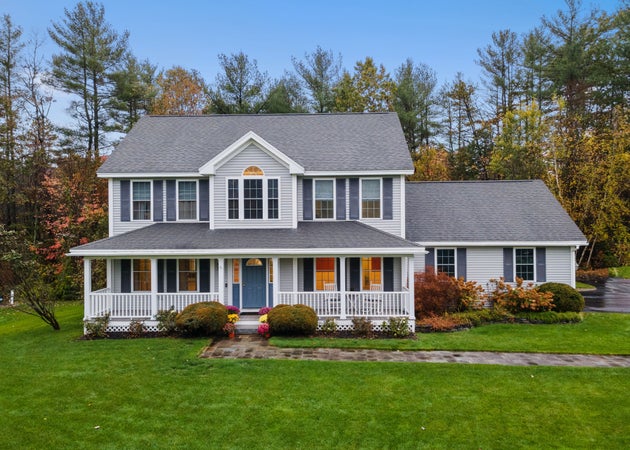
Georgia’s diverse geography includes beautiful mountains, stunning coastal areas, and thriving urban neighborhoods. At the same time, the state is vulnerable to more severe weather than other areas of the country. Homeowners face hurricane risks on the coast, tornado threats in Dixie Alley, and one of the nation’s largest concentrations of lightning strikes. In fact, Georgia consistently ranks as the fourth highest state in the U.S. for lightning-related insurance claims.
This means carrying sufficient home insurance in Georgia is crucial, but homeowners could face higher-than-average rates. Since 2021, Georgia premiums have risen by nearly 20% due to record-breaking storm damage and rising construction costs. Below, we’ll review important considerations, particularly around regional weather risks, and explore Georgia’s consumer protections and ways to keep insurance costs down in the Peach State.
Georgia home insurance requirements
State law does not require Georgia homeowners to carry home insurance, but given the state’s high storm risks — particularly from hurricanes, tornadoes, and thunderstorms — it’s a good idea to cover your home regardless.
If you currently have a mortgage on your home in Georgia, the conditions of your loan likely require that you insure the home anyway. This protects the lender’s financial interest in your property. Most mortgage contracts specify minimum coverage equal to at least the loan balance or the dwelling’s replacement cost, whichever is lower.
If you don’t purchase coverage or allow your home insurance to lapse, your lender can purchase insurance on your behalf. This is known as force-placed insurance, sometimes called lender-placed insurance. Such policies are generally more expensive than voluntary policies and provide far fewer protections. For instance, there’s no coverage for your personal belongings or your liability; it’s solely about protecting the structure of your home and any other buildings on your property. In short, it protects the lender, not you.
How does homeowners insurance work in Georgia?
This short video walks you through how to get a quote and what insurance covers. Click a topic on the video to jump straight to what matters most to you.
What does a standard Georgia home insurance policy cover?
A standard home insurance policy in Georgia covers damage to the dwelling and other structures on your property, as well as damage to your personal property, if that damage arises from a covered event (called a peril in the industry). It also offers liability coverage in the event a guest is injured on your property and living expenses if you must temporarily vacate your property after covered damage.
Let’s take a closer look at what your Georgia home insurance policy covers.
Dwelling coverage (Coverage A)
Coverage A, or dwelling coverage, is the core component of your home insurance policy, as it protects the “bones” of your house: the walls, roof, floors, built-in appliances, fixtures, and attached structures, such as garages.
When choosing a dwelling coverage limit, think about the home’s replacement cost, not what you’d list it for on the market. What would it cost to completely rebuild your home if it were destroyed?
In Georgia and across the country, construction labor and material costs have skyrocketed in recent years. For this reason, it’s beneficial to work with your insurance agent or an independent appraiser to evaluate how much it would really cost to replace your home — and make sure your policy offers adequate coverage.
Other structures (Coverage B)
Similarly, Coverage B in a standard home insurance policy provides financial protection for other structures on your property, including:
-
Detached garages
-
Sheds
-
Gazebos
-
Guest houses
-
Fences
A standard policy usually sets your Coverage B policy limit — the maximum payout you can receive — at 10% of your dwelling coverage limit. So, if you have $300,000 in dwelling coverage, you’d have $30,000 in other structures coverage. If you feel like that’s not enough, you can work with your insurer to increase it to a limit you’re comfortable with, but the cost of your policy will also increase.
Personal property (Coverage C)
Personal property coverage, or Coverage C, is what covers your belongings in the event they’re stolen or damaged by a covered peril. This includes:
-
Furniture
-
Appliances
-
Electronics
-
Clothing and jewelry
-
Artwork and decorative pieces
-
Pots, pans, plates, and other kitchen utensils
-
Toys and pet accessories
-
Books, movies, and other media
-
Gym equipment
-
Collectors’ items
Unlike dwelling coverage, most standard policies cover personal property on an actual cash value (ACV) basis. This means your insurer factors in depreciation when determining your payout for an approved claim. You can upgrade to replacement cost value coverage — the same type of coverage you have for the physical structure of your home — for personal property to ensure you’re paid what it actually costs to buy comparable items brand-new should they be lost or destroyed. This adds to your premium but can make a huge difference in a large claim.
If you have an abundance of high-value items, such as jewelry, artwork, musical instruments, or collectibles, you may need to purchase scheduled personal property coverage, which increases the coverage limits for your more expensive items.
Loss of use (Coverage D)
Coverage D, more commonly known as loss of use or additional living expenses (ALE) coverage, is critical if your home becomes temporarily uninhabitable while it’s being repaired or reconstructed after a covered claim. Loss of use can help cover:
-
Hotels or short-term rental costs
-
Pet boarding
-
Extended commute costs
-
Food bills
-
Storage for personal belongings
-
Laundry expenses
Standard insurance policies typically set loss of use coverage limits to 20% of your dwelling coverage limit. For instance, if your dwelling coverage is $300,000, your loss of use coverage would be $60,000. Though it varies by policy, loss of use coverage is typically limited to a specific time period, like 12 to 18 months after the covered event.
Personal liability and medical payments (Coverage E & F)
Personal liability coverage (Coverage E) pays for financial responsibilities if someone else is injured or their property is damaged because of your negligence. In plain English, this means the policy kicks in if you are found legally responsible for an accident because you failed to take reasonable care — like forgetting to salt an icy walkway or failing to secure a loose handrail.
Usually, personal liability coverage is capped at $100,000, though you can adjust your policy for higher coverage limits or add an umbrella policy if you have a high net worth. (Your assets are at risk in lawsuits, so you want enough coverage to keep them safe.)
Home insurance policies also typically come with medical payments coverage (Coverage F). This can help cover minor expenses when someone is injured on your property. It is usually capped between $1,000 and $5,000. Being able to quickly and easily cover a friend’s or neighbor’s ER visit after an incident at your home might help avoid a lawsuit altogether.
Common causes of damage: What’s covered and what’s not
Standard homeowners insurance typically utilizes two different methods for determining coverage: open peril for your dwelling and other structures, and named peril for your personal property.
To understand how this affects your protection, it helps to distinguish between these two terms:
-
Open peril: Damage is covered, unless it is caused by a peril that is explicitly excluded by your policy.
-
Named peril: Damage is only covered if it’s caused by a peril that’s specifically listed in your policy.
Perils typically covered in Georgia
Coverage may vary by insurer, so it’s important to read your policy closely to understand what your home insurance covers. For a general idea, here’s a breakdown of what most policies cover in the Peach State:
-
Fire and lightning: Lightning is particularly intense in Georgia during the summer storm season. Both direct damage from lightning strikes and damage from resulting fires are covered.
-
Wind and hail: Wind and hail from thunderstorms and tropical storms are covered, though some coastal and inland properties may be subject to a separate wind/hail deductible.
-
Theft and vandalism: Standard home insurance covers stolen belongings and vandalism to your property.
-
Falling objects: A common claim in Georgia’s wooded suburbs is a pine tree or large limb falling on a roof. Standard home insurance covers this damage.
-
Weight of ice and snow: This coverage is especially important in northern Georgia, where snow and ice are more likely in mountains and foothills.
-
Sudden water damage: This coverage includes damage from burst pipes and appliance failures, but it does not include damage from rising floodwaters.
Common exclusions in Georgia
It’s just as important to know what is not covered by your Georgia homeowners insurance policy, such as:
-
Flooding: This is the most critical insurance exclusion you should be aware of as a Georgia homeowner.
-
Earth movement: Earthquakes and sinkholes are rare in Georgia, but they can occur, especially in the northwest. These events are not covered by a standard policy.
-
Maintenance and neglect: Home insurance doesn’t cover general wear and tear or damage if you’ve neglected an issue. A roof that fails after 25 years or a foundation that cracks over decades are maintenance issues, not insurance claims.
-
Pest damage: Termites are a significant problem for Georgia homeowners. Unfortunately, home insurance doesn’t cover termite damage.
-
Government action: Damage or loss resulting from government seizure, demolition, or regulatory action is not covered.
Additional home insurance coverage to consider in Georgia
A standard homeowners insurance policy (formally called an HO-3) does not cover everything. Georgians may want to consider adding these coverage types to fill policy gaps:
-
Flood insurance: Water damage from flooding is not covered by standard homeowners coverage. Given Georgia’s higher flood risk from hurricanes and thunderstorms, experts recommend purchasing flood insurance.
-
Water backup coverage: Similarly, water damage from sewer backups and overflows is not covered by standard home insurance. You can add on a water backup endorsement to protect your home’s structure and your personal belongings in the event of water damage from sewer backups.
-
Earthquake insurance: Damage from earth movement is not automatically covered. While earthquakes in Georgia are rare, the Georgia Emergency Management and Homeland Security Agency warns that approximately 15% of earthquakes worldwide are in areas that are not along clearly defined active faults. Homeowners in northwest, central, and west Georgia are most at risk and therefore may want to consider earthquake insurance.
-
Identity theft coverage: Increasingly, homeowners are adding an identity theft endorsement to their home insurance policy to help recover costs associated with restoring your identity and credit in the event your identity is stolen.
The cost of home insurance in Georgia
On average, Kin homeowners in Georgia pay an average of $1,388 per year for a policy with $350,000 in dwelling coverage.
However, how much you pay for home insurance in Georgia will vary depending on several factors specific to you and your home. Your ZIP code plays a role, as well as the deductibles, coverage limits, and endorsements your policy includes.
For illustrative purposes, the table below shows average Georgia insurance premiums for Kin policyholders for various dwelling coverage limits.
|
Dwelling coverage limit |
Average policy cost |
|
$350,000 |
$1,388 |
|
$500,000 |
$1,982 |
|
$750,000 |
$2,974 |
|
$1,000,000 |
$3,965 |
Average premiums for Kin home insurance customers as of August 2026.
When calculating an individual homeowner’s policy costs, insurers consider details like:
-
Your home’s vulnerability to weather-related risks and natural disasters
-
Your home’s proximity to a fire station and hydrant
-
The age and condition of your home
-
Your past claims and claims previous owners of your home have filed
-
The deductibles you select
-
Your insurance-based credit score (which is influenced by your credit history)
-
Any home security systems or safety upgrades
Why Georgia rates are rising
Across the country, home insurance premiums are rising, according to the Insurance Information Institute (Triple-I), due to intensifying natural disasters and weather events and increasing construction and replacement costs.
The frequency of “billion-dollar disasters” in the state of Georgia has increased significantly in the last 45 years, per data from the National Oceanic and Atmospheric Association (NOAA). NOAA tracks weather and climate events that cause at least $1 billion in damage From 1980 through 2024, Georgia had 134 such disasters, including:
-
17 droughts
-
4 floods
-
3 freezes
-
68 severe storms
-
27 tropical cyclones
-
3 wildfires
-
12 winter storms
In the last few years, the cost in billions across these various events has more than doubled from decades ago, when costs are adjusted for inflation. Georgia home insurance premiums have increased to keep pace with the cost of these storms.
At the same time, social inflation — a term used by Triple-I and insurers to describe rising litigation costs, larger jury awards, and increased claims complexity — has pushed up the cost of settling liability claims across the Southeast, including in Georgia. Insurers typically pass higher costs of doing business like these on to policyholders in the form of higher premiums.
Regional cost variation
Where you live in Georgia has a significant effect on your premium. Coastal cities like Savannah carry higher wind and storm surge risk. This drives up rates for homeowners in the region, who are more likely to need to carry flood insurance, which also increases homeowners’ overall insurance costs. Similarly, Valdosta and other southern Georgia communities experience elevated tornado risks.
By contrast, suburban communities in northern Atlanta, like Alpharetta and Roswell, generally see lower base insurance rates because of lower wind exposure.
Georgia’s “big three” weather risks
Georgia’s geographic location is inherently at greater risk for certain types of weather events.
Hurricanes and tropical storms
Georgia is situated on the Atlantic Coast, but even inland parts of the state are at risk from both Gulf and Atlantic hurricanes and tropical storms. For instance, though Savannah and Brunswick are the most exposed during Atlantic hurricanes and tropical storms, tropical systems have caused significant wind and flooding damage as far north as Atlanta.
Standard home insurance covers wind damage from hurricanes, but not the associated storm surge flooding, which requires a separate Georgia flood insurance policy. Some higher-risk areas of Georgia may require homeowners to pay a separate hurricane deductible, typically calculated as a percentage of the dwelling’s insured value, ranging from 1% to 5%. For instance, the hurricane deductible on a home with $300,000 in dwelling coverage might range from $3,000 to $15,000.
Tornadoes and windstorms
You may have heard of Tornado Alley in the Midwest and Great Plains, but there’s a second storm corridor in the U.S. that’s known for tornadoes: Dixie Alley. Parts of central and north Georgia are located within Dixie Alley, which is known for smaller but year-round tornadoes, which often strike at night.
While you don’t need separate tornado insurance in Georgia, you should review your home insurance policy closely. You likely have a separate wind/hail deductible. Much like the hurricane deductible, the wind/hail deductible is commonly a percentage of your dwelling coverage, rather than a flat rate.
Georgia homeowners in high-risk areas should also consider extended replacement cost coverage in light of the state’s severe weather threat. After a major tornado event, local demand for contractors and materials can surge, pushing reconstruction costs well above what’s typical. Extended or guaranteed replacement cost coverage helps make sure your coverage won’t fall short.
The flood gap
Wind damage from hurricanes and tornadoes may be covered by your standard home insurance policy, but it’s a different story when it comes to flooding. Standard home insurance doesn’t cover damage from flooding, whether it’s from a rising river, a storm surge, or overwhelmed storm drains — all of which are possible in Georgia. This particularly applies to Georgia’s moderate- to high-risk flood zones.
You can check FEMA’s flood maps to see which flood zone you’re in. Obvious locations, such as Savannah, are at a higher risk for flooding, but don’t rule out getting flood insurance if you live in a low-risk flood zone. According to FEMA, 25% of all flood insurance claims come from homes in areas designated as low or moderate risk.
In Atlanta, for instance, rainfall intensity has increased by 13.2% in the last 55 years, according to a report from Axios Atlanta. That said, homeowners here should seriously consider purchasing a flood insurance policy, regardless of their flood plain.
Flood insurance is available through private insurers or the FEMA-backed National Flood Insurance Program (NFIP). While it might be easier to qualify for a policy through the NFIP, private insurers may offer more affordable premiums and other benefits. For instance, the waiting period for an NFIP policy to take effect is 30 days. Private insurers’ policies often take effect sooner.
Georgia insurance laws and consumer protections
Home insurance in Georgia is regulated by the Georgia Office of Insurance and Safety Fire Commissioner. This office oversees insurer licensing, rate filings, and consumer complaints. If you have a dispute with your home insurance company in Georgia or believe you’ve been treated unfairly, you can file a complaint with this office.
New for 2026, Georgia law requires that insurers provide 60 days’ advance notice before declining to renew a policy. Previously, only 30 days’ notice was required.
In addition, House Bill 511 established the Georgia Catastrophe Savings Accounts, a tax-advantaged way for Georgians to save money for high insurance deductibles for tornadoes, hurricanes, and floods.
How to choose the right home insurance coverage in Georgia
Choosing the right coverage for your home in Georgia is crucial for two reasons:
-
You want a policy with a premium that fits your budget.
-
You want a policy that offers enough coverage (and an affordable deductible) in the event of a claim.
Here are some tips for choosing the right coverage.
Focus on rebuild cost
A common coverage mistake is insuring your home for its market value, rather than its rebuild cost. These two figures can differ dramatically. Market value reflects what a buyer would pay for your home, while rebuild cost reflects just that: what it would cost to demolish and reconstruct the structure exactly as it is, using current labor and material rates.
If you’re currently insured for your home’s market value, you might be overpaying if you’re in a hot housing market. But if you have an older home that would be expensive to rebuild, but you’re only insured for the market value, you might not have enough coverage.
Many insurers offer replacement cost estimator tools, but you can also hire an independent appraiser to help you calculate the right coverage amount.
Make a home inventory
Given the frequency of hurricanes and tornadoes in Georgia — which, in the worst case, could wipe out your possessions — it’s crucial to create a home inventory of all your belongings. This is a documented list of your stuff with photos (or videos), serial numbers, and approximate values. Having a list of these details stored somewhere safe (ideally, stored digitally in “the cloud”) can make filing a claim much easier in the wake of a disaster.
Consider deductibles and coverage limits
When comparing policies, look beyond the premium. Carefully review your deductibles (especially any separate deductibles for hurricanes and wind/hail), policy limits (for the dwelling and your personal property), and additional living expenses (ALE) coverage details.
One step further, it’s just as important to dig into what coverage is not included in your policy.
How to save on your Georgia home insurance premium
Georgia home insurance doesn’t have to be unaffordable. Here are several ways to keep your insurance costs down in the Peach State:
-
Shop around: Compare quotes from multiple insurers to see which company can offer you the best deal. Always make sure you’re comparing apples to apples, though. The plans should all have the same deductibles and coverage limits for a fair comparison.
-
Upgrade your home: Georgia House Bill 279 requires home insurance companies to offer discounts to homeowners who’ve upgraded their homes with storm-resistant features. Specifically, the home must be constructed or retrofitted in accordance with the applicable FORTIFIED Program standards adopted by the Insurance Institute for Business and Home Safety as of Jan. 1, 2023, or any other mitigation program standards approved by the state’s insurance commissioner.
-
Research other discounts: You can also typically qualify for insurance premium discounts by bundling home and auto insurance and maintaining a claims-free history, among other things. Ask an agent which discounts are available that you might be eligible for.
Frequently asked questions about Georgia home insurance
Is home insurance in Georgia more expensive than other states?
Yes — although costs here are in line with the nationwide average. Based on 2024 figures from the Consumer Federation of America (the most recent numbers available), Georgia ranks as the 17th-highest state for home insurance premiums in the country. Homeowners pay an average of $3,037 annually, compared to the national benchmark of $3,303. These figures are drawn from combined data across several major insurers for a policy with $350,000 in dwelling coverage.
What is the Georgia FAIR Plan?
Fair Access to Insurance Requirements (FAIR) Plans are available to homeowners in certain states (Georgia included) as a last resort if they can’t qualify for a policy through private insurers due to high-risk factors, such as location or home age or condition. However, premiums through such plans are typically more expensive and coverage is more limited. In Georgia, the FAIR Plan is managed by the Georgia Underwriting Association.
Does Georgia have a “mandatory” windstorm deductible?
Most Georgia home insurance policies have a percentage-based deductible for wind and hail damage. Your wind/hail deductible will typically be 1% to 5% of your dwelling coverage amount. For instance, if you carry $250,000 in dwelling coverage and your wind/hail deductible is 1%, you’ll be responsible for covering $2,500 of wind/hail damage out of pocket.
Wind/hail deductibles are different from the standard deductible that applies to other types of covered damage — say, damage from a fire — which is typically a flat dollar amount. Common standard deductible amounts range from $500 to $2,500.
For wind-related damage caused by a named hurricane (e.g., Hurricane Helene), a third type of deductible may apply: a hurricane deductible. This deductible amount could be a flat rate or a percentage-based rate, depending on the specifics of your policy.
To find out which deductible is triggered when and how much each deductible is, read your policy documents carefully or speak with your insurance agent.
How does my credit affect my insurance in Georgia?
In Georgia, insurance companies can use your credit-based insurance score as a rating factor when pricing home insurance policies. This isn’t the same as your traditional credit score, but it’s calculated from similar credit report data. Homeowners with a stronger credit score typically qualify for lower rates on home insurance. In Georgia, insurers are required to notify you if an adverse action has been taken due to your score.


