





Most insurance companies either refuse to insure homes with older roofs or the price of the policy could be too expensive to afford.
A roof surfacing payment schedule is an endorsement that provides homeowners with coverage at a more affordable price. It also allows homeowners to replace their roof when necessary rather than when it reaches an inflexible age cut-off.
How a roof surface payment schedule works
A roof payment schedule modifies how your roof is insured. Without this endorsement, a roof is typically covered for its replacement cost — that is, how much it would cost to completely replace the roof with similar materials at today’s market rate. Since roofs are expensive to replace, insuring homes with older roofs would require very high policy costs (called premiums) to cover the financial risk the insurance company is taking on.
By adding a roof payment schedule endorsement, the insurer can offer coverage at a more affordable rate. It modifies the policy to cover the roof surface based on its age and materials.
Despite the phrase “roof surface,” the materials considered for policy purposes extend beyond the outermost layer. Other roofing components also matter, including but not limited to:
-
Shingles
-
Tiles
-
Underlayment
-
Felt
-
Membranes
-
Vent
-
Drip edges
-
Turbine
-
Skylights
In addition to allowing for more reasonable policy costs, these endorsements reduce the number of homeowners who are denied coverage by standard insurers and forced to turn to state-run FAIR Plans for coverage. If you have a new roof, the schedule’s impact is very little, but you could still save money on your home insurance premium.
Notably, this endorsement only adjusts payouts when roof surfaces are damaged by wind and hail. Other damage to the home is paid on a replacement cost basis as usual.
Who needs a roof surface payment schedule?
The roof surface payment schedule is designed to make a home insurance policy more affordable for homes with older roofs. But anyone who wants to save more on their premium would be a good fit for this add-on.
Depending on the state and the type of policy, this endorsement can apply to homes with:
-
Shingle roofs more than 10 years old
-
Metal roofs more than 10 years old
-
Tile roofs more than 10 years old
What are the benefits of a roof surfacing payment schedule?
The biggest benefit of this type of coverage is that it lowers your premium in exchange for a lower amount of roof coverage — but again, only for wind and hail damage. In short, the older your roof, the bigger your discount.
It’s also useful if you don’t want to pay for a brand-new roof to qualify for home insurance coverage with a standard insurer.
How is the roof payment schedule determined?
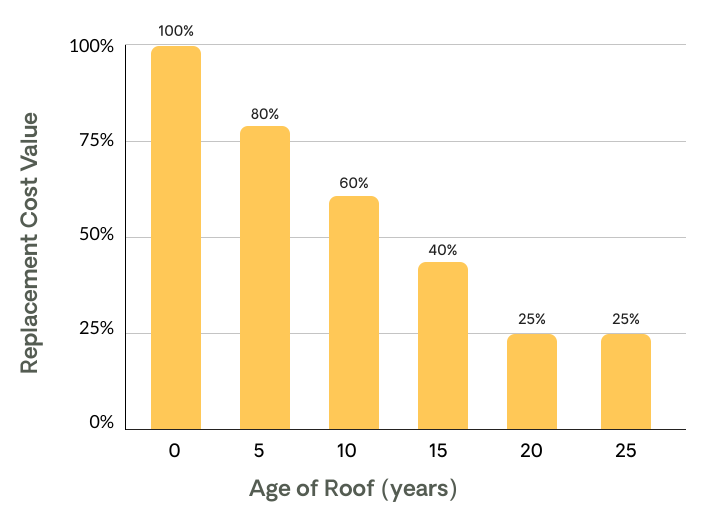
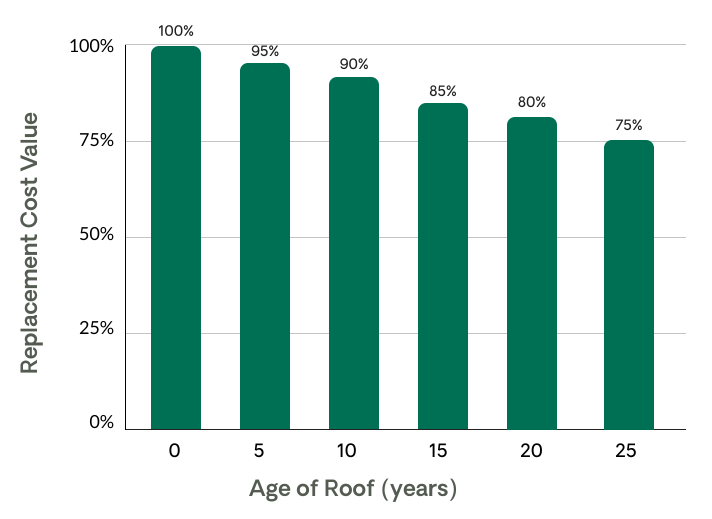
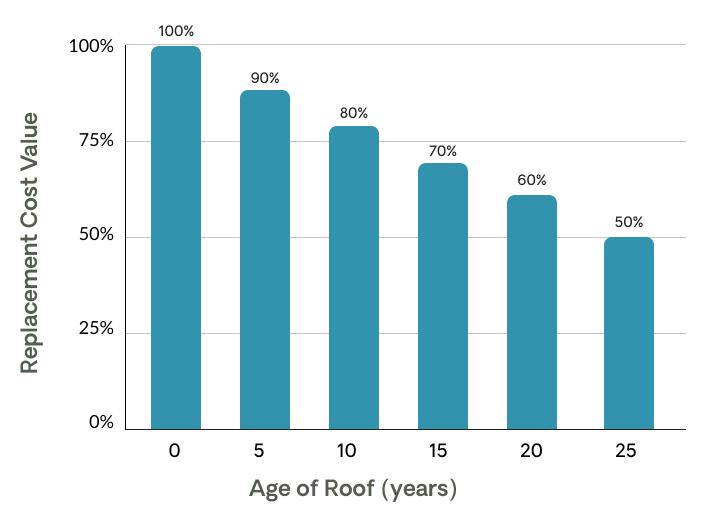
Roof claims for wind or hail damage are paid out on a set schedule based on the roof’s materials and age.
Here’s how the roof surface schedule typically works:
-
Metal reaches a maximum limit of 30% at 30 years (1% a year)
-
Tile reaches a maximum limit of 60% at 30 years (2% a year)
-
Shingles reach a maximum limit of 75% at 19 years (4% a year)
-
Between zero years and the years listed above, the percentage adjustment is applied equally each year
So, say your shingle roof is heavily damaged during a windstorm, and it would cost $15,000 to replace it. In this instance, your roof is 12 years old.
According to the schedule, your roof is reduced by 48% (4% x 12 years = 48%). That puts a potential payout for this claim at $7,800 ($15,000 for the replacement cost minus $7,200 for the schedule's impact equals $7,800).
When does the roof surfacing payment schedule apply?
The roof surfacing payment schedule only applies to roof damage caused by wind and hail events. That includes:
-
Windstorms
-
Hailstorms
-
Sleet
-
Hurricanes
-
Tornadoes
-
Derechos
If the roof is damaged by another event, like fire, the roof surface payment schedule wouldn't apply.
Does the roof surface payment schedule affect the rest of my home?
No. Even with this endorsement, the rest of your home is still insured up to its coverage limits. So, say a hurricane tears a hole in your roof and water gets inside your home. Damage to the roof surfaces would be paid out subject to the schedule. The rest of the damage would be paid at the cost of rebuilding without applying the schedule, so long as you have replacement cost coverage.
