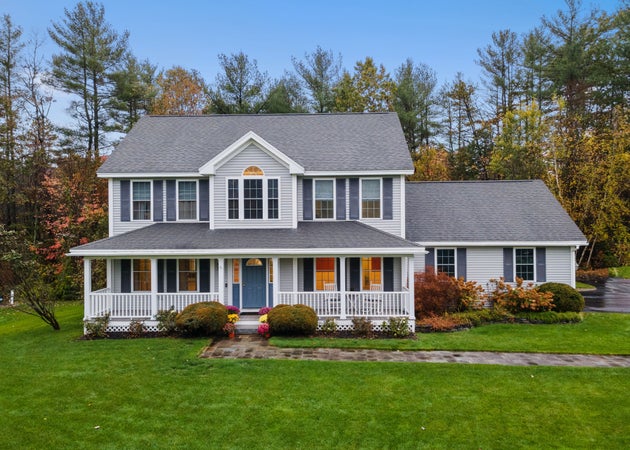
Why get a mortgage with Kin?
We help you secure the house. You make it a home.

Lower rates
We offer Kin-specific interest rates that make mortgages even more affordable.

Customizable options
We find solutions that fit your budget and save you money.

Fast and easy
Our friendly experts work on your timeline — and we're here to help.
When do you need a mortgage quote?
We can power you forward at every step in the process.

Preparing financially
Buying a house takes time. Talk to us early to help you plan confidently.

Starting to look
When you’re starting your house search, get pre-approved with Kin so you’re ready to make offers.

Making an offer
When you have a home in mind, and you want to make an offer.
Common questions about mortgages
What is a mortgage?
A mortgage is a type of loan specifically used to buy or refinance a home. It is a contractual agreement where a lender provides you the funds to purchase property, and in return, you agree to pay that money back — plus interest — over a set period.
The home itself serves as collateral for the loan. This means if the loan isn't repaid as agreed, the lender has the right to take possession of the home through foreclosure.
How does a mortgage work?
Most mortgages follow a similar lifecycle, starting with the day you get your keys and ending when you make that very last payment. Here’s how the process works:
- Down payment: You typically start by putting down a chunk of your own cash, typically between 3% and 20% of the home's price. The mortgage covers the remaining amount.
- Principal and interest: Every month, you make a payment. Part of it goes toward the principal (the actual amount you borrowed) and the rest toward interest.
- Amortization: This is just a fancy word for your payback schedule. In the early years, most of your payment goes toward interest. As time passes, a larger portion pays down the principal until the balance is gone.
- Escrow: Many lenders also collect extra money each month to pay your property taxes and homeowners insurance for you. They hold this in a side account called “escrow” and pay those bills when they’re due.
- Term length: This is your timeline. Most people choose a 30-year term for lower monthly payments, though a 15-year mortgage term would allow you to own the home sooner and save a substantial amount on interest.
How do I apply for a mortgage?
Applying for a mortgage involves a fair amount of paperwork, but the process generally follows these steps:
- Credit check: Before talking to a lender, look at your credit score. A higher score helps you snag a lower interest rate, which can save you thousands over the life of the loan.
- Pre-approval: You’ll provide a lender with general information about your finances — like income, debts, and assets. If approved, they’ll give you a pre-approval letter, which tells sellers you’re a serious buyer with the backing to make an offer.
- Application: Once you have a signed purchase agreement, you officially apply for the loan. This is when you’ll need to submit additional financial documentation like tax returns, pay stubs, and bank statements.
- Underwriting and appraisal: The lender’s underwriter (a financial expert who evaluates the risk of lending to you) double-checks your documents to ensure you meet all lending guidelines. They’ll also order an appraisal, where an independent professional estimates the home’s market value to ensure it’s worth the price you're paying.
- Closing: If everything clears, you’ll sign all necessary paperwork, pay your closing costs, and get the keys.
How do I qualify for a mortgage?
Qualifying for a mortgage depends on your overall financial health. Lenders look at key factors to ensure you can comfortably manage a home loan. To assess your situation, consider the following:
- Check your credit score: Your credit score is a snapshot of how reliably you pay back borrowed money. Generally, a score of 620 or higher is needed for conventional loans.
- Calculate your debt-to-income (DTI) ratio: This is the percentage of your monthly gross income that goes toward paying debts (like student loans or credit cards). Most lenders look for a DTI of 43% or less.
- Save for a down payment: While putting 20% down is nice, contrary to popular belief, it’s not always required.
- Verify your income: Lenders usually require two years of steady employment history, proven through W-2s and tax returns.
- Get a pre-approval letter: This is a formal document from a lender stating how much they are willing to lend you. In a competitive market, this shows sellers you are a serious, vetted buyer.
What types of mortgage loans are available?
When choosing a mortgage, the best option depends on your personal and financial circumstances. Most loans fall into two categories: conventional or government-backed.
- Conventional loans: These are the most common choice. They aren't insured by the government and typically require higher credit scores. If you put down less than 20%, you’ll usually be required to pay private mortgage insurance (until you reach 20% equity), which protects the lender if you stop making payments.
- FHA loans: Insured by the Federal Housing Administration, these are popular with first-time buyers because you can qualify with a credit score as low as 580 and a down payment of just 3.5%.
- VA loans: For veterans and service members, these Veterans Affairs loans often require 0% down and have no monthly mortgage insurance.
- USDA loans: These are 0% down loans for buyers in eligible rural and suburban areas, backed by the U.S. Department of Agriculture.
What is the difference between a fixed and variable mortgage rate?
| Feature | Fixed-rate mortgage | Adjustable-rate mortgage (ARM) |
| Interest rate | Stays the same for the life of the loan. | Starts lower, then fluctuates based on the market. |
| Monthly payments | Predictable; principal and interest never change. | May increase or decrease after the initial "fixed" period. |
| Common terms | 15 or 30 years | 5/1, 7/1, or 10/1 (Fixed for 5, 7, or 10 years, then adjusts annually). |
| Best for | Long-term owners who want stability. | Short-term owners or those expecting a significant income increase. |
Should I consider a 30-year or 15-year mortgage?
Deciding between a 30-year and a 15-year mortgage depends on your monthly budget and long-term financial goals.
A 30-year mortgage is the most popular choice because it offers lower monthly payments, giving you more breathing room in your budget for other expenses or savings. However, because the loan lasts longer, you will pay significantly more in interest over time.
A 15-year mortgage allows you to own your home sooner and usually comes with a lower interest rate. The trade-off is a much higher monthly payment.
How can I get the best mortgage rates?
To secure the most competitive mortgage rate, you must prove to lenders that you are a low-risk borrower. Focus on these key areas to lower your costs:
- Improve your credit: Lenders reserve the best rates for high credit scores. According to FICO data, borrowers with scores in the 760–850 range typically qualify for interest rates nearly 1.5% lower than those with scores near 620.
- Increase your down payment: A larger investment reduces the amount you need to borrow, and therefore, the lender’s risk.
- Compare offers: Rates vary by financial institution. Get several quotes to compare.
- Buy points: You may be able to pay an upfront fee, known as a discount point (usually 1% of the loan amount), to permanently lower your interest rate.


